The Program
09:30
Keynote
Keynote: When AI takes your place 
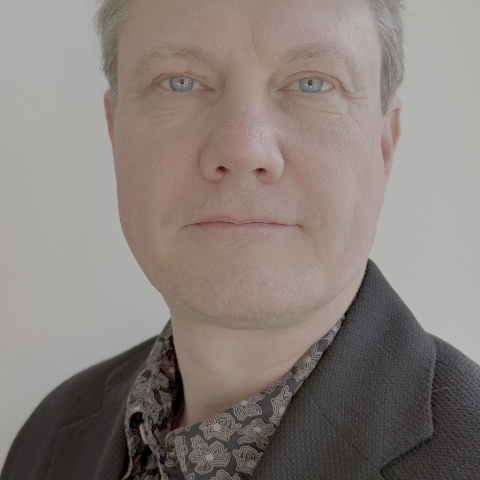
Dr. Martin Brynskov University of Copenhagen
Vita
Martin Brynskov, PhD (CS), is an academic and digital standardisation expert at the University of Copenhagen, where he serves as scientific director of AI and Digital. He is currently writing a book titled When AI Takes Your Place, exploring how artificial intelligence reshapes institutions, infrastructure and everyday life as it unfolds in communities of different sizes. His research examines how people, machines and hybrid systems perceive, conceptualise and act together in shared environments, framed as Interaction Technologies within a Place-Based Computing paradigm.
Brynskov has led some of the world’s largest pilot studies on smart and sustainable cities and communities, focusing on connecting communities, data spaces, local digital twins, artificial intelligence and the internet of things. He is Standardisation Lead and former Founding Chair at the Brussels-based global NGO Open & Agile Smart Cities & Communities (OASC), co-chairs the Danish Standards committee on data management and data spaces, and represents Denmark in European and international standardisation work on data spaces, local digital twins and smart sustainable cities and communities.
Based in Copenhagen, Denmark, Dr Brynskov works globally as a researcher, innovator, educator and facilitator, bridging research, policy, standards and large-scale experimentation.
11:00
Technical implementation of open data across borders - Live translation available in English.
Chair:
Linda Gernitz
How can open data catalogs be standardized technically and tailored to specific municipalities? In this session, the speakers will discuss urban data management. Learn more about their data strategies in detail.
-
Norman Radtke (Institute for Applied Informatics) and Eric Engels (Hessian Ministry for Digitalisation and Innovation): Data handling in the Open Data Portal Hesse
In their joint presentation, Eric Engels and Norman Radtke highlight special features in the reuse of data catalogs from existing open data portals (e.g. filtering for Hessian content), the expanded presentation of content, the generation of statistical evaluations of data catalogs, and the preparation of their own data catalogs (e.g., a partial data catalog for each municipality). The focus of this work is strongly on data homogenization and standardization, for example, to enable alignment at the file level. The proposed solutions are implemented both within the CKAN extension developed in Hesse itself and on the data of the knowledge graph (RDF, DCAT), using SPARQL update queries.
-
Matthias Rumpf: Publish confidential data securely and flexibly using the Cell Key method
Data sets containing personal and other confidential information are usually only published in summary form and with few subcategories. The risk of confidential individual values being inferred from differences between different summaries is too great. The cell key method allows these data sets to be published flexibly without revealing confidential information. The presentation introduces the cell key method and a software solution that supports the workflow for creating data sets modified using the cell key method and also provides a user interface for publication.
-
Guido Blome (Federal City of Bonn): Urban Data Management Bonn – A change project with many dimensions
Since 2020, the federal city of Bonn has been actively pursuing a strategic approach to urban data. The presentation describes the latest active developments in the areas of technical development of an urban data platform based on the open source project Civitas Core, the introduction of a data strategy and governance, and activities to increase data literacy in the administration and urban society. The aim of these activities is to achieve comprehensive data excellence in the handling of urban data.
15:30
Data for autonomous mobility in cities and smart traffic control - Live translation available in English.
Chair:
Linda Gernitz
Gain practical insights into the requirements of modern mobility infrastructures. How can we ensure both safety and efficiency in their implementation? And what are the key technologies driving the smart mobility of the future?
-
Ruslan Hrushchak (BitCtrl Systems GmbH): Autonomous shuttles: Data basis for intelligent on-demand mobility
Autonomous shuttles are key technologies for the mobility of the future. But what data do they need to offer on-demand services efficiently and safely? Based on many years of involvement in the ABSOLUT II project, this presentation provides practical insights into the data requirements and architectures of autonomous shuttle infrastructures.
-
Dr. Thomas Trabert
(Helmholtz Centre for Environmental Research GmbH - UFZ): Environmentally Sensitive Mobility Management with AIAMO – Artificial Intelligence and Mobility: A Practical Look at the Leipzig Pilot Region
-
Max Mooij
(MobilityLabel BV): Influencing Commuting Patterns Through Relevant Data: The Roles That Cities and Employers Can Play
-
Eike Schulz (Office of Mobility and Civil Engineering, Traffic and Data Management) and Thomas Grzeschik (Office of Mobility and Civil Engineering, Traffic and Data Management): Data-Driven and AI-Based Traffic Management in Leipzig
Modern dynamic traffic management is increasingly data-driven and smart. New methods of traffic data collection, along with AI-based data analysis and tools, are opening up new possibilities for controlling and managing urban traffic. At the same time, high-quality dynamic data is made available to users and developers via open interfaces to create added value through collaboration. During the presentation, new applications and data foundations of traffic management in the city of Leipzig will be introduced and explained using practical examples and visualizations. These include, among other things, a smart green wave app, AI-based calculation of signal timing forecasts at traffic lights, as well as solutions for detecting current and past atypical traffic conditions in the urban road network and new, intelligent solutions for giving priority to public transportation. Current applications of high-reach routing platforms such as Google Maps for traffic management will also be outlined.